Sunday, November 12, 2006

Tangled Up in Babel


How is it ever possible that we understand one another?

In director Alejandro González Iñárritu's superb new film, "Babel," the characters struggle to communicate even when they speak the same language. But the story takes place in four different countries -- America, Mexico, Morocco and Japan -- with the actors using six different languages -- English, Spanish, Arabic, Berber, Japanese and Sign. Transcending foreign language and cultural barriers in reality is all but impossible. Now that the globe is connected as never before by technology, how can we love the neighbor that might be a terrorist, who has wronged us in some way, who disagrees with our values, and whose speech and face are different from ours?

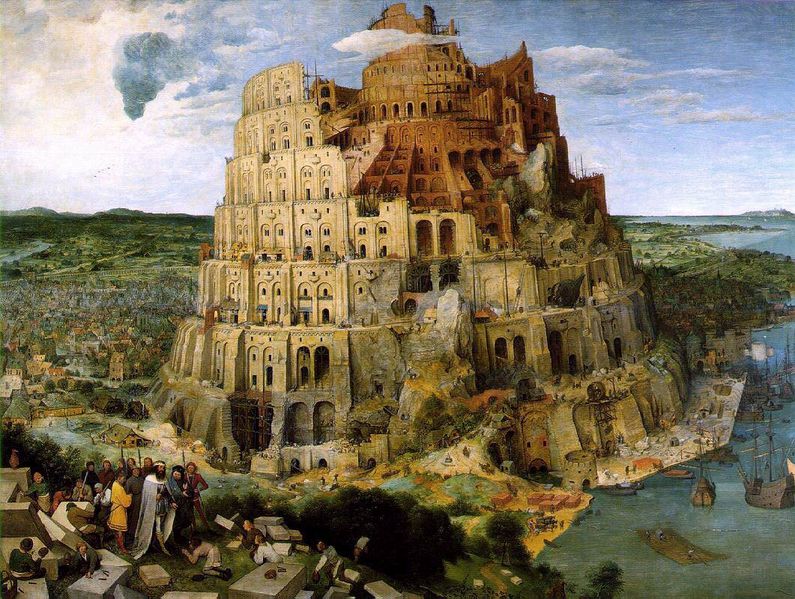
Pieter Brueghel the Elder's 16th century painting of the Tower of Babel illustrates the story in the book of Genesis that mythologically explains the diversity of speech in the world. The Sumerians build a tower to heaven, perhaps intended as a gateway for the gods to come to earth. These great towers of Babylon, called ziggurats, were said to be among the largest religious structures ever built. The Hebrew author of Genesis sees them as a threat to the one god's sovereignty and considers their construction a form of hubris rather than an invitation. "Come, let us build ourselves a city and a tower with its top in the sky, and so make a name for ourselves," the Sumerians say in the Genesis account. The Hebrew god, however, is not pleased. "If now, while they are one people, all speaking the same language, they have started to do this, nothing will later stop them from doing whatever they presume to do." To curb their upityness, he says, "let us then go down and there confuse their language, so that one will not understand what another says." He then proceeds to destroy the city and scatter the people. The Hebrew word for this city, Bavel, is related to the verb balal, which means "to confuse or confound."

What can we make of this quaint myth in a world where the diversity of speech, as well as cultural customs, continue to confuse and confound us? In the 21st century, the world, while increasingly homogeneous on some levels, is becoming more and more fragmented. The ruins of Babylon are sixty miles south of Baghdad in a country where Sunnis and Shi'as are slaughtering each other because of a difference in religious identity. Although peaceful at the moment, the Irish divide themselves along sectarian lines. The people of the subcontinent, once united under English rule, now hate one another, Indian and Pakistani. Both Jews and Arabs are Semitic people, but they are fighting to the death in the Middle East over disputed land, their separate religious identities masking any similarities in culture and tradition.

Rodney King, the black man whose beating sparked rebellion in Los Angeles, asked the crucial question: "Why can't we all get along?"

Language, like religious, ethnic and national identities, can divide us. What can pull us together?

The major characters in González Iñárritu's "Babel," as in the previous films of his trilogy -- "Amores Perros" and "21 Grams" (all written by Guillermo Arriaga) -- are victims of a fate over which they have little control. There are tragic accidents in all three films, random violence as difficult to understand as words in a foreign tongue. The other major ingredient in these films is family: the characters are tied together by blood and marriage, and the glue that holds them together is often their children. In "Babel," a couple travels to Morocco to ease the pain of the death of a baby, while their two remaining children are cared for by an undocumented Mexican nanny whose son is about to be married in Tijuana. Across the globe, a Japanese father struggles to understand his rebellious deaf mute daughter who is suffering from the suicide of her mother. The link that brings the narrative together is a gun.

Stories help us make sense of our world. The answer González Iñárritu gives in his films is love. But this love does not change the chaotic, meaningless nature of reality, the random nature of violence, the futility of fate. Rather it enables us to endure it. Without love we are lost; with it we can survive for another day. In "Babel," the nanny is deported, but love of her son sustains her. We see the embrace of the Japanese father and his child, the love of a Berber boy for his brother, the resurrection of a marriage in the aftermath of an accidental shooting. The world remains a dangerous place, but hope can survive through love, on the screen and in reality.

Language and the difficulty of understanding one another was also the theme of Sofia Coppola's wonderful "Lost in Translation" a couple of years ago. And glossolalia, or speaking in tongues, comes up in two recent films. In the scary documentary "Jesus Camp," teens and preteens are whipped into a religious frenzy at a summer camp run by a fundamentalist minister, and they babble nonsense syllables through their tears. Language is twisted by the rituals, dogma and preaching into a black or white, devil or angel world view that will scar these children forever. But this world view is skewered delightfully by Sacha Baron Cohen in the mockumentary "Borat: Cultural Learnings of America for Make Benefit Glorious Nation of Kazakhstan," when, after learning that Pamela Anderson is not the paragon of virtue he imagined, he stumbles into a real holy roller assembly and begins to babble along with them. The true believers are no less frightening, but at least there is comfort in shared laughter, much like the nervous laughter inspired by ghost stories.

In our own lives, there are misunderstandings and mistranslations. I struggle to understand the reality of my son Luke who is under dual diagnosis treatment in Boston for alcoholism and borderline personality disorder. We watch our words carefully but the love between us calls us to try and try again to bridge the gap and see the world through the other's eyes. I continue to try and make sense of why I stayed in a marriage for nearly twenty-five years when the ending made it obvious how different we were. The only answer I can come up with is continuous compromise inspired by a love that passes all understanding. Now I wonder where that love went.

We frail and fallible human beings can really understand very little in this life. Today our Tower of Babel is the skyscraper of science and technology and it lures us into thinking we know it all. But the terrorists of 9/11 leveled two towers in no time at all using only box cutters, jet airplanes and a fanaticism without limit. The love that arose out of that disaster, love among family and friends searching for the missing, and love and support of the world for our country's tragedy, is the love that will sustain us in troubled times.

Thursday, November 09, 2006

Yet Another Israeli Massacre

Once again Israeli troops have massacred innocent Palestinian civilians. In the latest bloodbath, Israeli artillery shells killed 18 people, including 8 children and 6 women, at a cluster of houses in Beit Hanun, one of the largest single losses of life in Gaza in years. Over 60 were wounded, 26 of them children.

Because these "accidents," as Israeli authorities invariably term them, are becoming common, and because we can become numbed to the horror of ongoing Israeli genocide, I will quote from an Associated Press description of the scene:

"Shells were fired directly onto the people who were rushing out of the house," said Akram al-Athamna, a relative of the victims. "There was blood everywhere."

Another family member, 14-year-old Asma al-Athamna, said she saw her mother, older sister and brother-in-law die as they fled their home. "I was behind them and I was wounded," the weeping girl said from her hospital bed. Her 2-year-old niece, Malak, lay in an adjacent bed, recovering from shrapnel wounds to her face.

The family is prominent in Beit Hanoun and includes several doctors and professionals. Family members said they had fled during the Israeli offensive, returning home after Tuesday's pullout.

Bits of dismembered bodies were plastered to walls of the damaged buildings and lying on the ground. A woman's head scarf, children's boots and slippers, and a pair of jeans — all burnt — were strewn outside.

Weeping relatives gathered outside the homes. One man dipped his hand in victims' blood and smeared it over his face. "God avenge us, God avenge us," he wailed.

A young man, standing in the bloodied alleyway, said an infant girl had been blown to pieces. "I tried to look for her head, I tried to look for her head," he shrieked, then sank to the ground, weeping.

How long will the world permit Israel to slaughter Palestinians? Will the celebrated victory of the Democratic party on Tuesday make possible a change in U.S. policy toward Israel? The blood of the murdered Palestinians is on our hands, for years of U.S. government support and financial assistance have made possible the oppression of the Arab Muslims and Christians of Palestine.

This does not justify the killing of innocent Israelis by suicide bombers. Terrorism is the weapon of the weak. When the Zionists were fighting English occupiers for the independence of Israel, they used terrorists techniques to great effect. However, any examination of the 60-year bloody history of Israel will conclude that the casualties have been overwhelming disproportionate. The killing of hundreds of well-fed 1st world citizens of Israel is outweighed by the deaths of thousands of suffering 3rd world citizens in the Occupied Territories.

There is a solution: Demand an end to Zionist apartheid in the Middle East, and call on Israel to become a true democracy with full rights of citizenship for all residents of Israel and the Occupied Territories, Jew, Muslim and Christian (The "One State Solution"). In the 21st century, no religious state can be called a democracy, and a country in which followers of one religion massacre the followers of another is an abomination.

Thank You, Jesus

Does anything else need to be said?

Tuesday, November 07, 2006

VOTE: Democracy is in Peril

Today is election day. VOTE! Our democracy depends on your voice through the election process. Our country is in crisis and the outcome of this election will determine our future, as well as the world's. The Bush Republicans MUST be thrown out of power.

The above quilt is in the Quilts of Gee's Bend exhibition at the de Young Museum in San Francisco. It was made by Irene Williams in the 1960s and includes ribbons with the word "VOTE" that were distributed in Alabama to encourage blacks to overturn the apartheid regime that had kept them oppressed since the Civil War. The campaign, which involved thousands of civil rights workers from the north, some of whom were martyred, was successful.

Our government has been hijacked by militarists, religious fundamentalists and global corporate pirates. Innocents in wars around the world are being slaughtered with weapons made in America, the life support systems of the planet are dying because of corporate greed and government inaction, and precious human rights, and moral laws like habeus corpus, are being overturned and rolled back by militant right-wing Christians whose authoritarian agenda strays far from the gentle truths taught by Jesus.

The Republicans' "October Surprise" turned out to be not the invasion of Iran or the nuking of North Korea, but the conviction of Saddam Hussein for a 20-year-old crime, the undoubtedly horrible killing of innocent Kurds. But if the U.S. used military force to capture and try criminal heads of state, we would become bogged down in hundreds of such escapades, toppling the leaders we had previously held hands with before. Our foreign policy is, and perhaps always has been, hypocritical. Others might call it pragmatic. Except now. Saddam, like Tito before him, was able to create a viable state composed of bitter enemies. Without him (and Tito in the Balkans), the former citizens have turned into murderous antagonists. The Iraqis are well aware that life was better under Saddam's reign, however tyrannical he may have been. Remember that the Iraqi state was created by Europeans after World War One; it is not a natural entity. So now Saddam is going to the gallows. Would that George Bush might follow him for his own war crimes!

George Bush and the Republican Party is responsible for this disaster in Iraqi and in this country, and, although this isn't a presidential election, control of Congress hinges on the outcome at ballot boxes all across America. VOTE the bastards out!

Two current movies give dire warnings about out future if the Republican regime remains in power. "Jesus Camp," a true documentary about a Christian youth summer camp in North Dakota led by a minister with the fervor of a Mussolini, shows pre-teens being trained to become militant shock troops who will grow up to impose abortion laws and put prayer back in the schools through force. Be afraid, be very afraid. The other film, "Catch a Fire," shows what happened in apartheid South Africa when a white government used terrorism as an excuse for torture. If you think Guantanamo has no place for you, think again.

If we let democracy slip out of our hands by leaving control of Congress in the hands of Bush Republicans, God help us. As Thomas Jefferson said:
Every generation needs a new revolution.

Friday, November 03, 2006

When Life Meets Art

"Quilts?" I asked when my friend suggested we visit the new de Young Museum in San Francisco while we were waiting for our visa applications to be processed at the India Consulate. Looking at bedspreads wasn't my idea of a fun time. "But these are special," he said. And so they were.

The Quilts of Gee's Bend is an exhibit of 60 quilts made by four generations of African American women who live in a bend of the Alabama River not far from Selma. A New York Times review of the traveling exhibition described the quilts as "some of the most miraculous works of modern art America has produced." They were awesome. The quilt pictured above, made by one of the younger members of the collective, 50-year-old Essie Bendolph Pettway, stopped me dead in my tracks with its vivid beauty. It was pieced together from fabric that had been used to make dresses for herself and her mother, Mary Lee Bendolph, another one of the quilt makers. Many of the older quilts used found material, such as empty flour sacks and even ribbons saying "VOTE" from a voter registration drive in the 1960's. The quilt that moved me the most featured pieces from the worn work clothes of the maker's husband after he died, and in a brief description she explained that she wanted to wrap them around her in bed at night.

A 28-minute video in a room off the exhibition hall featured interviews with a number of quilt makers. They were eloquent without being what urban dwellers would call articulate, and the southern dialect required subtitles to be understood. The quilts were made by poor sharecroppers and their descendents who could not afford to buy bedspreads. The walls of their houses were papered with pages torn from newspapers and magazines to keep the wind out. Women passed down the secrets of quilting to their daughters and the practice bound together both the community and the generations. "We were poor but we were happy," one woman exclaimed, and I got a sense of how the burden of poverty might also be a blessing. Our culture of abundance has not brought happiness for its beneficiaries. We are smothering under a mountain of store-bought things, crying out "more stuff!" with our last breath. Buying off the shelf distances us from the land and the workers who labor to turn what the land produces into something useful. And these quilts are, before all else, something useful. That they are now seen as art is secondary.

I discovered later that the documentary film of the quilt makers in the exhibition was co-directed and produced by Vanessa Vadim, the 38-year-old daughter of Jane Fonda and Roger Vadim, the French filmmaker who directed the young Fonda in "Barbarella." His first wife was Brigitte Bardot whose career he launched with "And God Created Women." Vadim and Fond's daughter was named after Vanessa Redgrave. In addition to the quilting film, she has produced documentaries on racism, sexism, classism and homophobia.

For more information about the The Quilts of Gee's Bend, look here and here. The exhibit has been held over until Dec. 31.


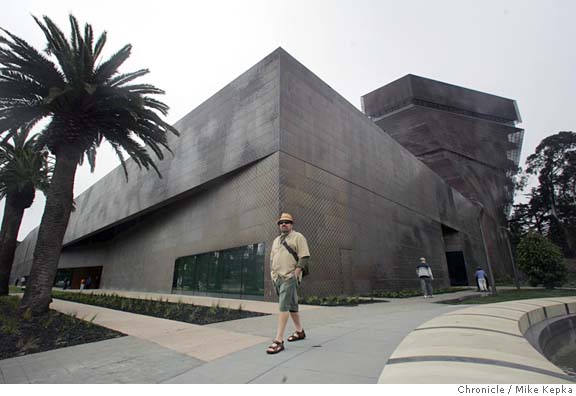
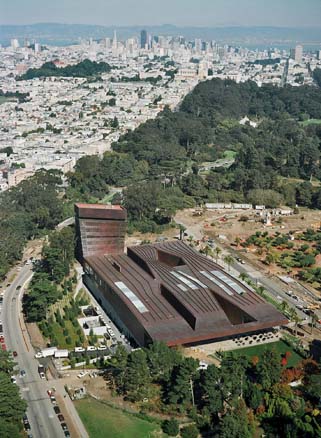
The new de Young Museum, which has been open for just over a year, was an awesome surprise. Its vast walls and halls reminded me of the Tate Modern in London, housed in a huge old power plant on the south bank of the Thames, which I visited last year, and I learned that both museums were designed by Swiss architects Pierre de Meuron and Jacques Herzog. The main entrance to the De Young features a walkway of pavement stones and boulders designed by environmental artist Andy Goldsworthy which includes a series of earthquake-inspired cracks. The giant box of a building, which has been likened by critics to a rusty aircraft carrier, is sheathed in stamped and dimpled copper to simulate the dappled texture of sunlight filtering through leafy trees. At one end is a 144-foot tower that twists in a clockwise direction and appears, from a distance, to be falling. The view from the 9th floor, even on a foggy and rainy afternoon, was stunning. Below, the eccentric landscaping of Walter Hood which defies symetry, could be seen to best effect. "This is not your standard art-filled box," wrote the Chronicle's John King. If the building "doesn't have the skin-deep romance of its predecessor, it offers something deeper: a hint of mystery, of secrets that might reveal themselves over time."

After lunch, our group of eight pilgrims walked in the rain through the dramatic Osher Sculpture Garden at one end of the building to the almost subterranean "skyspace" designed by James Turrell. The artist, known for his visionary work with light, calls it "Three Gems," for reasons that escaped me, and it has the feel of sacred space. The round chamber modeled after a stupa is entered through a tunnel walkway, and includes a stone bench where visitors can view the sky through a round hole cut in the ceiling. Subtle lighting changes color which alters the sky's perception. For our visit, an almost white sky and spraying rainwater gave a unique perspective. After a time of silence, we almost spontaneously broke into song, our voices echoing deeply with the chamber. It was a priceless moment.

The old de Young was fatally damaged by the 1989 earthquake. When a bond measure to rebuild the museum failed in 1998, socialite Dede Wilsey embarked on a capital campaign to raise $190 million from private sources, $10 million from her own fortune. More than 7,000 donated money in amounts as small as $5. It is one of the largest private gifts ever given to a city for cultural purposes.

The history of Michael de Young, who first established the museum, is shrouded by scandal and rumor. Known primarily as the founder of the San Francisco Chronicle, de Young and his family arrived in San Francisco during the Civil War. The de Jongs were Dutch jews. According to historian Grey Brechin, author of the fascinating Imperial San Francisco: "Rumors kept circulating that Mother de Young had run a whorehouse back in St. Louis, and that Charles and Michael de Young's sister had worked, gainfully, in that establishment. They were considered shady people." The Chronicle was famous for yellow journalism, and Charles was shot and killed by the son of a Baptist minister he had defamed. The minister, Brechin says, called the de Young brothers "the bastard progeny of hell, the illegitimate offspring of the keeper of a whorehouse." Later brother Gustavus de Young was sent to an insane asylum in Stockton. In 1884, Michael de Young himself was shot by the son of sugar baron Claus Spreckles over a supposed libel, but he survived. The jury acquitted the shooter on the grounds of reasonable cause. Ambrose Bierce wrote, "Hatred of de Young is the first and best test of a gentleman."

The M.D. de Young Memorial Museum was established with profits and artifacts left over from the California Midwinter International Exposition of 1893. The fair was de Young's idea and the original museum housed over 6,000 objects left behind as well as his own collection and thousands of items donated by local families wishing to preserve artifacts from the Gold Rush era.

The descendents of the de Young continue to rule San Francisco today, Brechin says, and he details the in-bred exploits of more recent generations in his book which he says was written to explain the basis for the power structure's current legitimacy.
These people with vast wealth and power today are self-conscious aristocrats. I think its important to go back and see what these fortunes were built on — essentially blackmail, extortion, and other criminalities were at the roots of some of these family fortunes.
The legacy for us is the new and very modern de Young museum and exhibitions which include the beautiful and insightful story of the quilting artists of Gee's Bend. Not a bad tradeoff, it seems to me.

To visit the de Young's web site, click here.

Wednesday, November 01, 2006

Days of the Dead


We have not one but three days to celebrate death.

Last night was Halloween, never one of my favorite holidays, when everyone, young and old, tries on new identities to see how they fit. My favorite, seen last night among the crowds of crazies on Pacific Avenue in Santa Cruz, was a young Latina with a blood-splattered baby struggling to climb out of a hole in her pregnant belly. There were numerous witches and vampires, and the usual walking dead without costumes taking photos and videos of skimply clad teenagers shivering in 40-degree weather.

Back in the Sixties, when I was a reporter for the San Francisco Chronicle, I was assigned to cover the party on Halloween at the Black Cat, a notorious bar for homosexuals on the edge of North Beach. Halloween was the only day when transgendered folks could legally cross dress and it was a major social event. There were bleachers for spectators, kleig lights criss-crossing the sky, and limos which unloaded the glamorous stars, Miss this and Miss that, to thunderous applause.

It is also the day when we sing these immortal words from Bobby "Boris" Pickett's Halloween anthem "Monster Mash":
He did the Mash. ("He did the Monster Mash!")
He did the Mash. ("It was a graveyard smash!")
He did the Mash. ("It came on in a flash")
Pickett, so our mutual friend Mike told me, invested his earnings in Afghani hash which he then smuggled back into this country inside of oriental rugs. Ah, the Sixties!

Last night thousands congregated downtown in streets emptied of cars as a police helicopter circled overhead. The Santa Cruz Sentinel reported that
General themes in costumes emerged as the night deepened. The ornate Mexican wrestler mask — think "Nacho Libre" — was a frequent go-to item for men. For women, a surprisingly popular look was the yellow-and-black honey bee, accompanied by a yellow tutu and twirling antennae.

On the political front, one Dick Cheney grinning carrying a shot gun and what looked to be a dead quail in a cage was spotted. A few Borats mixed with a couple of Ali G.'s. The haunted V from "V for Vendetta" was seen several times as was Shrek, the Energizer Bunny and the droogies from "A Clockwork Orange."

This morning the legacy was trash in the streets, rotting pumpkins, and two people in the hospital with stab wounds. Certainly not a few students went to class with hangovers.

Today is the Feast of All Saint's Day, also called All Hallows Day. Tomorrow is All Souls Day. Both today and tomorrow are celebrated by Mexicans as Dia de Los Muertos, the Day of the Dead. I'm not sure how the four celebrations are connected, but the theme of death is all pervasive. Long Live Death!

Of course, by means of Google and Wikipedia, you can now find out everything; the internet is one big brain which never forgets anything, though it often fails to distinguish between fact and rumor. The Day of the Dead came first, celebrated by the Aztecs for thousand of years. Spanish conquistadores were horrified by their celebration of death, which was based on the belief that life was just a dream and death was the only true reality. Today Mexicans celebrate the date with marigolds, sugar skulls and a special bread, as well as the construction of household shrines and processions to the cemetery. It has been especially popular in Oaxaca, but all celebrations there have been curtailed by the present revolution and oppression. In Guanajuato, I visited the Museum of the Mummies, one of the area's top tourist attractions, where dozens of mummified human corpses, mysteriously preserved by unique climatic and soil conditions, are on display. The grusome place had a festive air as parents pointed out to young children the baby mummy and the pregnant mummy.

I asked Noel, my expert on all things religious, to explain the difference between All Saints Day and All Souls Day and he simply noted that "we are all souls but only a few of us become saints."

Garrison Keillor told me on the radio yesterday that All Saints Day was started in the 3rd century by Pope Gregory the Great to counter the pagan holidays. One of them might have been Samhain, the Irish word for November, when the first three days were celebrated by the Celts as the end of the summer season and the harvest. It's also the name for one of the sabbat feasts to mark the Wiccan wheel of the year.

I think it's a good thing to remember the dead and to realize that life for all of us is a terminal disease. On these days of celebration and remembrance, I will think of my father and mother, my uncles and aunt, my good and much-missed friend Peter, Allen who survived a heart attack but not liver cancer, Betsy and Ma'im who died from breast cancer and hepititis C, and all of those other friends and relatives who are gone but not forgotten. They live on, if not in Heaven, at least in our hearts.

Sunday, October 29, 2006

Woebegone Presidency

"Woebegone" is defined by a few online dictionaries as: " Affected with or marked by deep sorrow, grief, or wretchedness," and, " Of an inferior or deplorable condition." Is there any word or expression that better defines the state of the presidency in the United States?

Of coure, Lake Woebegon is also a fictitious town in Minnesota, the creation of Garrison Keillor, host of A Prairie Home Companion which is heard everywhere on public radio stations. Keillor is the Will Rodgers of the 21st century, an apolitical homespun humorist who makes us feel good about the America that still exists in the land of ideals. Or does he?

My friend Jane emailed me a copy of Keillor's syndicated column published earlier this month which begins: "I would not send my college kid off for a semester abroad if I were you. Last week, we suspended human rights in America, and what goes around comes around. Ixnay habeas corpus." Whoa! I had been taking Keillor for granted. This guy does not mince words. And if he does, he throws in some spicy seasoning to make our eyes water and our hearts burn.

Keillor, in yet another passionate column this month, describes the Military Commissions Act of 2006 as "legalizing torture and suspending habeas corpus and constructing a loose web of law by which you and I could be hung by our ankles in a meat locker for as long as somebody deems necessary." And in a third October column, Keillor celebrates Columbus Day by wondering who might win the title of the All-Time Worst President. "The Current Occupant...is contending with Pierce, Buchanan and Warren G. Harding," and adds, "he's had so much more to be worst with."
I propose that we change Columbus Day to Bush Day, a cautionary holiday, like Halloween, a day to meditate on the hazards of ambition. We could observe it by going through the basement and garage and throwing out stuff we don't want or need.

Also by not mortgaging the house to pay for a vacation, and not yelling at the neighbors, and not assuming that the law is for other people. A day to honor kindness, industriousness and modesty.
Certainly not everyone likes Keillor. A writer in the National Review once called him a "horrid left-liberal scold, dripping with contempt for nearly everything Middle American." Why is it that the Right can't take a joke? They have their comedians -- Rush Limbaugh, Donald Rumsfied, and Ann Coulter -- and we have ours -- Jon Stewart, Michael Moore, Al Franken, etc., and I'll match our blue team against their red one any day.

But Keillor, like Stewart, is not just a comedian, no matter how much they pretend otherwise. Both speak truth to power. The It's-OK-to-Torture bill was supported by 65 senators. None of them, Keillor writes, "has any right to speak in public about the rule of law anymore, or to take a high moral view of the Third Reich, or to wax poetic about the American Ideal. Mark their names." A couple, he noted, made a show of opposing the bill but voted for it anyway because they believed the court will throw it out.
If, however, the court does not, then our country has taken a step toward totalitarianism. If the government can round up someone and never be required to explain why, then it's no longer the United States as you and I always understood it. Our enemies have succeeded beyond their wildest dreams. They have made us become like them.
Many of you have seen the passionate critique of this horrendous bill by Keith Olbermann on MSNBC. If I could figure out how to include video in my blog, I would put it here. In the meantime, if you click here, you can find Olbermann on truthout.org.

But, as Keiller reminds us, "Maybe we've been too lenient with enemies of the state. A period of stark repression might be a rich and rewarding experience for all of us." Perhaps Cheney and Bush will decide in a couple of years that giving up power will be tantamount to cutting and running in the face of global terrorism, and they'll cancel the next presidential election. Anything is possible.

Needless to say, VOTE on Nov. 7 for political representatives and senators who will save us from this insanity.

Monday, October 23, 2006

Friday, October 20, 2006

Secrets

Reflection for today's communion service on readings from Ephesians 1:11-14 and Luke 12:1-7:


How many of us want to have our hidden secrets revealed to the world?

I’m not talking about the people who confess their innermost secrets on television tabloid talk shows like Jerry Springer and Oprah, the ones who are looking for their 15 minutes of fame. I’m speaking about the rest of us who have something to hide that we don’t want other people to know about. The psychologist Jung called this our shadow side, and he said that most of us cover it up as best we can.

Sometimes we pretend that things are otherwise, that we are happy and at peace with the world, when inside we are frightened and insecure. Or we criticize others for not living up to the values they profess in order to hide the fact that we have failed. This is especially sad when it is revealed that preachers and members of Congress advocate moral values that they themselves cannot follow. Surely this is the hypocrisy, the leaven of the Parisees, that Jesus warns against in the synoptic Gospels.

Jesus tells us today that there is “nothing concealed that will not be revealed, nor secret that will not be known.” This follows from the fact that nothing escapes the notice of God who even counts the hairs on our head, over 100,000 of them. (Did you know that? Blondes have more and redheads less. You can find out everything from Google these days!)

This news, about the omniscience of God, can be both wonderful and scary. Each of us, in the depth of our hearts, wants to be known as we are and accepted for whom we are. This is the essence of love. And to be known and cared for by God, the master of the universe, is the pinnacle of love. In the light of God’s love there are no shadows. Perfect love casts out all fear.

But the all-seeing eye of God can also be a fearsome thing. There are some secrets too terrible to stand the light of day.

A couple of nights ago I was in Boston visiting my son Luke, and he took me to a meeting of Alcoholics Anonymous. It was held in the cafeteria of a psychiatric hospital and there were men and women of all ages and, judging by their appearance, from all social classes. But all were alike with their secret, an addiction to alcohol or drugs, and sometimes both, that had nearly destroyed their lives.

The stories they told, of families broken up and jobs lost, were heart breaking. Addicts lie, again and again, to their families, their friends, and to their employers. The turning point for many is when they realize that only a Power greater than themselves can help them withstand the seduction of addiction. When they realize, in other words, that God knows the truth about them and yet still cares for them, for every hair on their head.

My son has been struggling with his addictions for many years. He has an acute sense that he has failed in life, and no amount of assurance from me seems to relieve his guilt. He knows that AA might be his last hope, but he resists becoming fully involved in the program. At the meeting we attended, I heard the speaker tell of achieving a “moment of peace” that revealed to him the presence of a Higher Power. And this presence helped keep him on the road to sobriety.

I pray that my son will find that peace that passes understanding, and that he will realize that God loves and cares for him despite the terrible secrets he carries within, secrets that only become bearable for him with alcohol. In the light of Christ’s love, all is forgiven and we can live without fear.

Wednesday, October 18, 2006

One Day at a Time


On Monday, Luke and I drove up the New England coast, from Gloucester on Cape Ann above Boston, along New Hampshire's brief shoreline, to Kennebunkport in Maine. It was my son's 39th birthday, and I joked with him that, like comedian Jack Benny, he could now stay 39 forever. But Luke does not want to stay where he is.

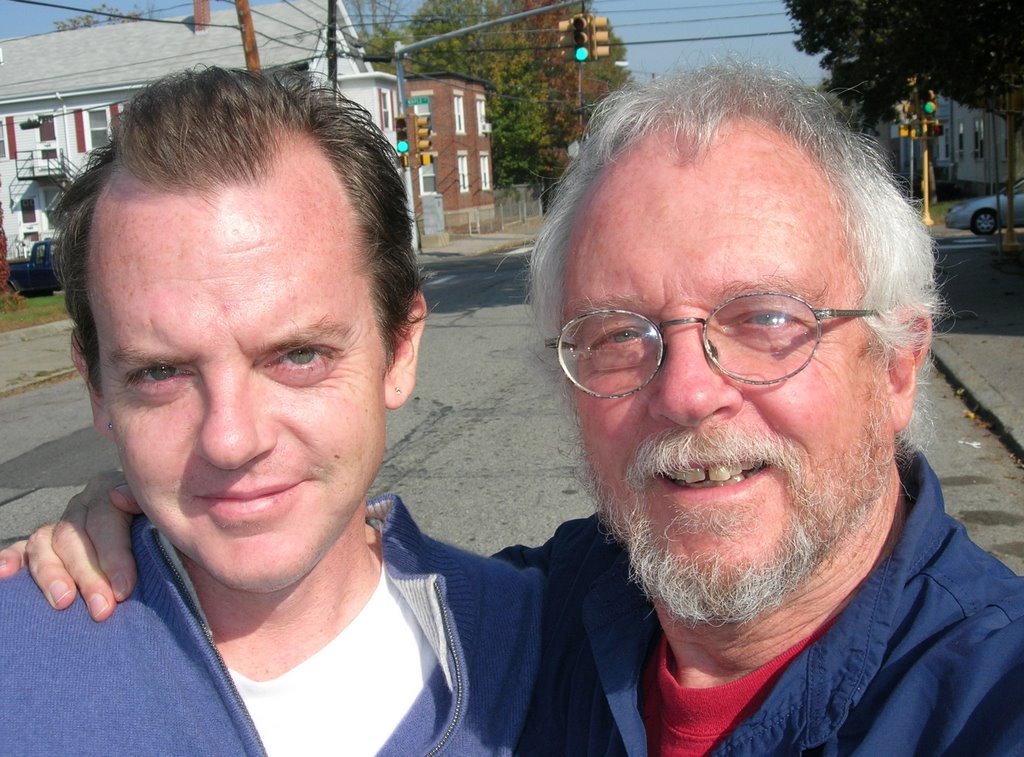
"I'm Luke, alcoholic." Last night, my son took me to an Alcoholics Anonymous "newcomers" meeting in the cafeteria at McLean Hospital in Belmont, a suburb of Boston. It was the location for Susanna Kaysen's memoir, Girl Interrupted, the story of her two-year treatment for borderline personality disorder after a suicide attempt when she was 18. It was made into a film starring Winona Ryder and Angelina Jolie. Luke has a DVD of the film and it's one of the reasons he is now in Massachusetts, on disability and in treatment at St. Elizabeth's Medical Center in for psychological problems and alcoholism. At the meeting a number of people told heartbreaking stories of lives almost but not quite destroyed by alcohol and drug addictions. There were people newly graduated from McLean and patients on temporary leave with tell-tale blue bracelets on their wrists.

In the afternoon, we met with Luke's therapist, Erin, after negotiating the labyrinthine corridors of St. Elizabeth's to find her office in the outpatient psychiatric clinic. I found her to be understanding, sympathic and blunt as she explained to me the services available to Luke. The challenge is for Luke to stop drinking and abusing prescription medication, which he does to numb the pain of anxiety and depression, and instead let the doctors and support groups take over. He has been diagnosed with a bewildering variety of psychological conditions -- bipolar disorder, borderline personality disorder, hypomania -- and takes dozens of pills every day. But despite treatment, he "slips" frequently, cuts himself, and has been hospitalized three times since April. Last year he suffered a number of seizures. Getting the medication right is difficult; on our trip he was jittery, his muscles tight, and he had difficulty speaking and seeing. This was not caused by alcohol, however, but from the wrong mix of drugs. Erin scolded Luke for not calling his psychiatrist and getting the prescription adjusted.

At the AA meeting, a woman sitting at our table told the gathering how she had been prescribed codeine for pain after an operation, and how when the pain passed she worried about the unused tablets sitting in her medicine cabinet. They were a temptation for her. And I realized that I, too, was an addict, for not that many months ago I was given codeine after a tooth extraction, and long after they were needed for pain I continued to take the remaining pills to relax. Codeine is a definite temptation for me.

For a little while, Luke was able to get out of his uncomfortable skin and enjoy the autumn scenery with me. Winter is on the way but it has been mostly warm and sunny this visit. We took the back roads from Gloucester up to the New Hampshire border. Displays of pumpkins and scarecrows competed for space with signs for political candidates; the upcoming election has been much in evidence. In Vermont I thought Marie Osmond's brother Donny was running for a state office, but it turned out to be Donny Osman, no relation. Crossing over into New Hampshire was a revelation. U.S. Highway One was lined with strip malls, fast food franchises, outlets and brand name shops. Perhaps the lack of a sales tax makes it a prime shopping area for south of the border residents. Unfortunately, it seemed tacky. Mostly landlocked, the state was making the most of its tiny seashore.


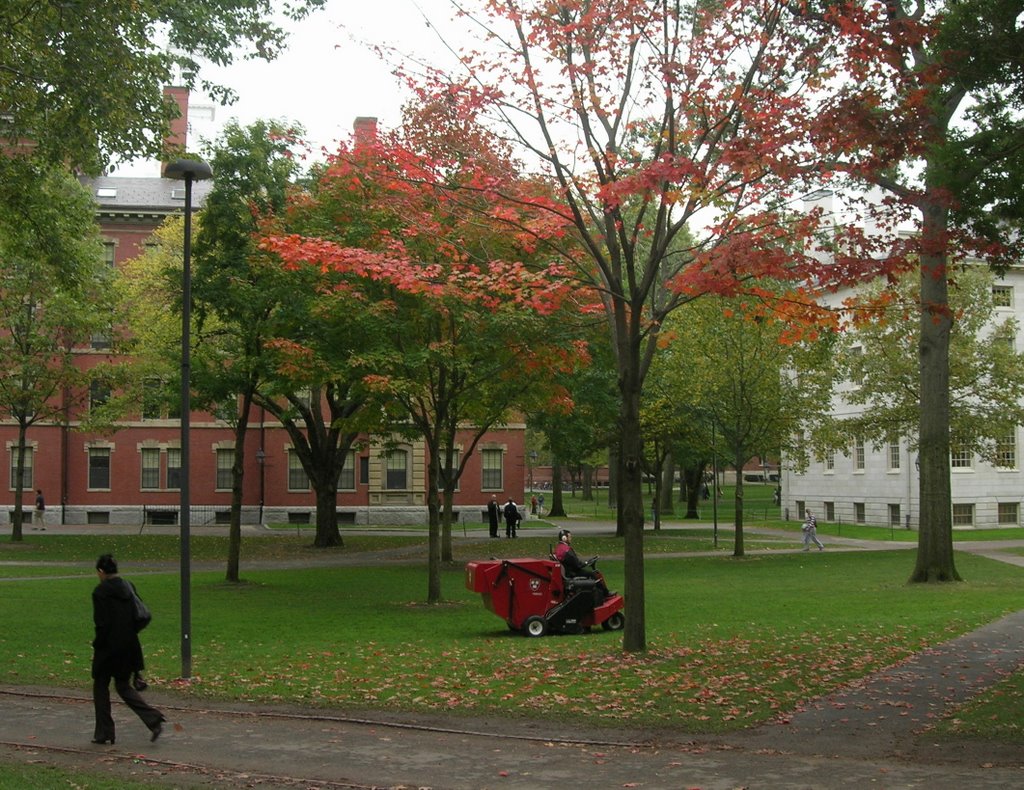
Yesterday afternoon we drove over to Cambridge and explored the campus and Harvard Square. In the Old Yard, a ride-on mower was sucking up leaves as soon as they fell. Tourists were taking pictures in front of the founder’s statue and his foot was rubbed to a golden shine by visitors wishing for good luck. We peeked inside Memorial Hall to see the baroque dining facilities for students and the stained glass. And we browsed the bookshelves in the Harvard Co-Op and looked over CDs on sale at Tower Records which is going out of business. The square was full of beggars and buskers under cloudy skies.

In a little while I leave this home away from home and head for Logan to catch my flight back to San Francisco. Hotels are discovering innovative ways to cut costs. For example, this one provides no maid service for stays of less than four days. So my residence is showing a bit of wear and tear. A TV set dominates the room, and I have once again been able to experience the banality of American television. All those channels and nothing worth watching. Fox News is a scandal and CNN is little better; both present idiotic variations of "Entertainment Tonight" with celebrities indistinguishable from politicians. No wonder Americans are the most ill-informed nation on earth, and consequently vote for mentally challenged politicians.

I have enjoyed my journey through New England, and even managed to see a corner of Maine for the first time. All of the cliches are true. If you get off the interstates and onto the back roads, New England is a panorama of rolling hills and small towns with charming two-storey houses clustered around tall church steeples. The range of colors in the autumn leaves constantly delighted me, and I will remember them for a long time in my winter dreams.

Monday, October 16, 2006

Hanging with the Leaf Peepers


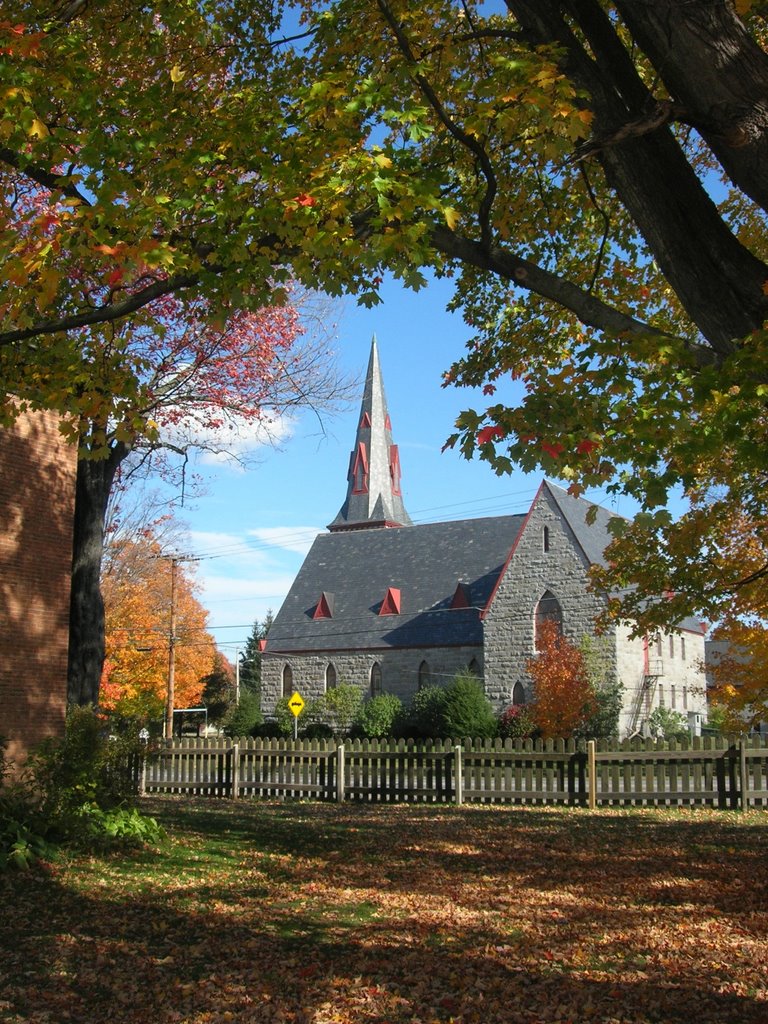
Fall foliage is big business in New England. The roads are full of tour buses and cars with out of state plates, the hotels are booked in advance as I found out when I tried to get a room in one where the parking lot was empty, and tiny towns with church steeples rising above orange trees are packed with visitors. "How's the color?" and "Has it peaked yet?" can be heard on every side. The leaf peepers are in season.

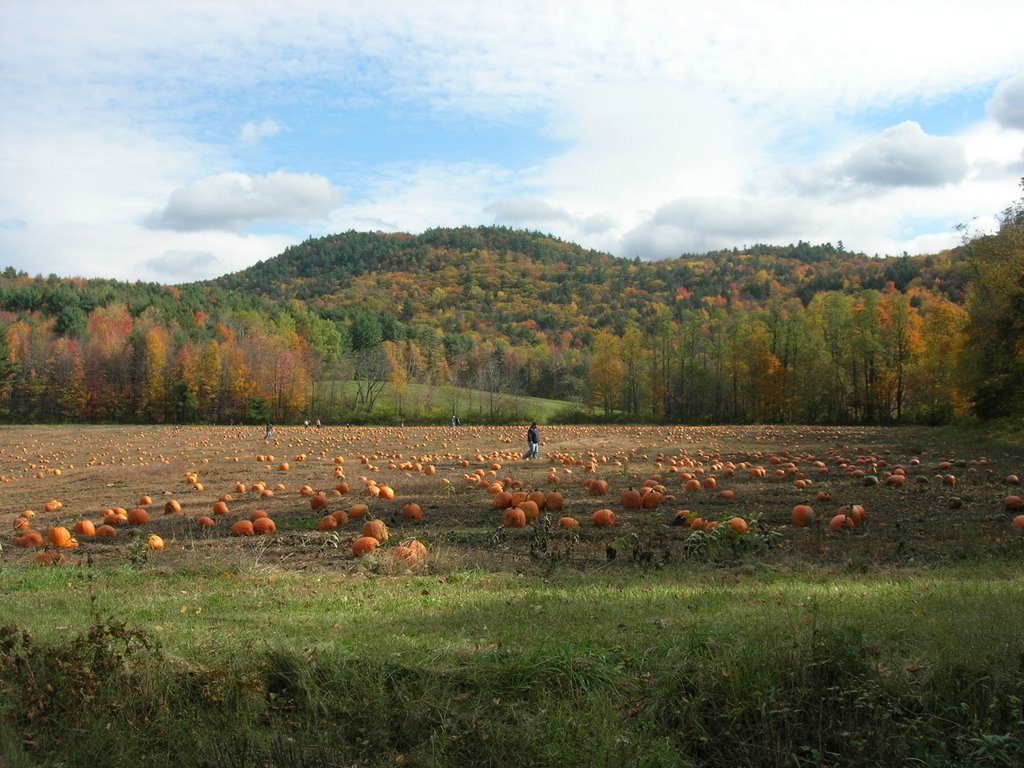
The dominant color is orange, and even where pine trees keep the forest green you can find a speck of orange in the ubiquitous pumpkin. They're everywhere, in the fields, on house porches and in stores, along with what appear to be scarecrows. New Englanders like to make fall tableaus to illustrate the season not unlike the Christmas creches on lawns in December. They also decorate their houses with ghosts and bats and cobwebs. Halloween is a major event in this region where everything will soon shut down after the snow season begins.

Not everyone likes the leaves. My friend Jim in Bristol, VT, surveyed the acre of lawn and trees in his backyard and calculated the work it would take to remove the fallen and soon-to-fall leaves before snow covered the ground. Leaves kill grass and so would have to go. He tried mulching them with his ride-on lawn mower but was displeased with the effect. So we raked up several piles and filed the bed of his truck with them. The next morning we desposited the leaves at the nearby city dump. It seemed like an endless job, an illustration of eternity.

In southern New Hampshire, the fall foliage color has been spoiled by a leaf blight affecting mostly Norway maple trees. Instead of turning red, the leaves fade to yellow with an ugly black spot in the middle. In the north, up near Burlington, Vermont, the leaves in places have peaked, leaving hillsides of bare branches waiting for their covering of snow. I passed numerous ski resorts, still deserted, and at Mad River there was a sign saying "Pray for Snow." In some regions through which I traveled, fields of pine trees held the green in place, punctuating the splashes of deciduous oranges and reds. Looking for the perfect photograph is dangerous business. I kept my Nikon at the ready on the seat beside me and frequently pulled over to the side of the road when I spied a fabulous vista. But all too often I found the view obscured by wires and poles. Capturing this annual transformation is hard work.

Yes, I've joined the tribe of leaf peepers. A number of us, mostly white-haired, stood in the lobby at Ben & Jerry's ice cream factory in Waterbury as we waited for the tour to begin (every ten minutes). You can't look at leaves all of the time. And Ben & Jerry's is an icon for baby boomers who now have the leisure time to look for their roots. The lobby was filled with self promotion and sourvenirs. Two Jewish nerds from New York come to Vermont in the 1970s and make such good ice cream that it goes global. And they do it by promoting social and political causes with every pint. They name their first unique blend after Jerry Garcia. Could anything be more cool?

But Ben & Jerry sold out. "They've gone to do their own thing," the tour guide told us, over free samples of apple pie ice cream, complete with bits of apple and pie crust embedded in the vanilla. What isn't mentioned in the literature is that B&J is part of the Unilever family of products, which includes Best Foods mayonnaise, Coleman's mustard, Lipton tea, Dove soap and Pepsodent dental products. It is the world's largest manufacturer of ice cream under a variety of different brand names. How can you be socially conscious when you're an integral part of global capitalism's reign of terror?

Besides Cherry Garcia, my favorite flavor these days is Phish. I didn't buy a tie-dyed tee shirt, however.

For my last day in Vermont, Jim and Linda took me to Shelburne Museum south of Burlington which features over 40 acres of exhibits in a multitude of facilities including a fully-restored Lake Champlain steam ship, the Ticonderoga, now in drydock on the landscaped grounds. Many of the antiques and folk arts on display were assembled by the eccentric collector, Electra Webb. I saw old toys and a variety of weather vanes. A docent explained the the history of the Ticonderoga and how it operated, and another made objects in a blacksmith shop that had been moved piece by piece to the grounds of the museum. There was also a visiting exhibition of paintings by Georgia O'Keefe that was attracting the biggest crowds.

On the way back to Bristol, we stopped in Charlotte and took a brief trip on a Lake Champlain ferry to visit New York state across the lake. This was the shortest and most southerly ferry route, but it operates all year round. The passenger compartment contained photos of a ferry navigating through ice to keep the states connected. As we neared the village of Essex, now mostly closed for winter, dark clouds headed eastward from the Adirondacks. Rain was on the way.

Thursday, October 12, 2006

On the Interstate

Traveling was simpler when Jack Kerouac and his pal Neal Cassidy set off after World War II to see America, a trip memorialized in On the Road. In the novel, Cassidy as Dean says "we gotto go and never stop going until we get there." And Kerouac as Sal asks "where we going, man?" "I don't know," Sal tells him, "but we gotta go." And they head across America in a beat up car, meeting hipsters and digging the sights. Kerouac's testament continues to motivate and inspire:
The only people for me are the mad ones, the ones who are mad to live, mad to talk, mad to be saved, desirous of everything at the same time, the ones who never yawn or say a commonplace things, but burn like fabulous roman candles exploding like spiders across the stars and in the middle you see the blue center light pop and everybody goes "AWWW!"
The other day, on this mad, crazy dash across New England, I tried to find Kerouac's grave in Lowell. But off the interstate, I got lost in a tangle of city streets and failed to find the Edson Cemetery on Gorham Street. I needed Dean Moriarty by my side as co-pilot helping to navigate the path to the past. Rest easy, Sal.

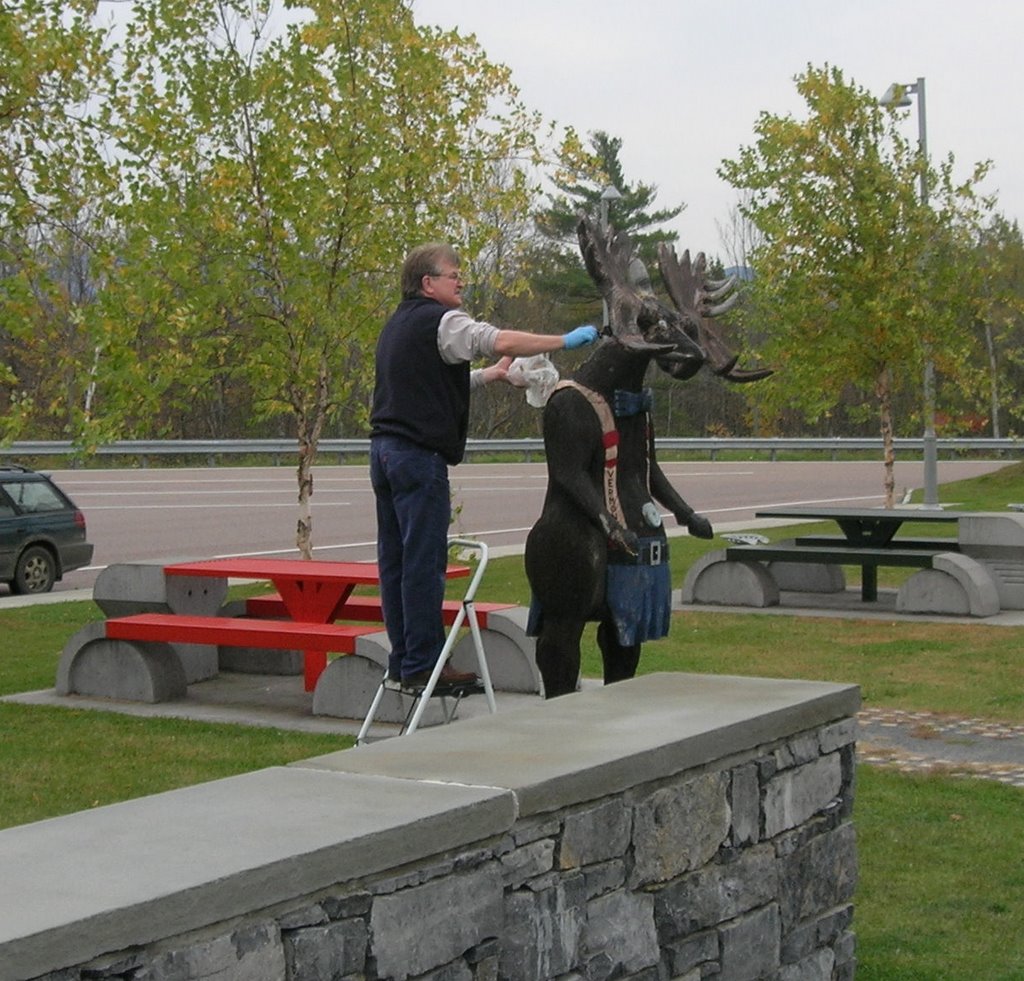
My intentions were good. Setting out in a rented Chevy Malibu with more technological bells and whistles than I could understand, I stayed off the interstate yesterday morning and headed north into the autumnal wilds of New Hampshire in search of the perfect cappuccino and a free wireless for my laptop. The day was overcast and rain was promised, so the fabled leaves on the rolling forest trees around me were less than vivid. Still, the procession of small towns and the antique barns in between, not to mention the charm of Halloween decorations along the way, made the relatively slow journey enjoyable. On the road I began to see "Moose Crossing" signs, and at a rest stop I found a workman touching up the paint on the statue of a moose. Moose country!

A connoisseur of college towns, my first stop was Hanover, home of Dartmouth. I quickly got lost in a maze of tiny streets wrapped around a corner of the campus. After several hours of driving, I was in need of a pit stop, which I soon found in the Collis student center where the cluttered tables and ever-present laptops reminded me of Lulu's back home. Refreshed and renewed, I went into the Dirt Cowboy Cafe where the wireless was not functioning and the cappuccino was less than excellent. Back on the street I found that this portion of Hanover (was there any other?) was glitzy shops past which walked men in suits and dressed up ladies. A few penniless students in patched jeans could be seen, but the whole atmosphere was upscale. Where were the homeless? I'm sure Dean and Sal would have been appalled, so I split.

Since the day was advancing and I had places to go, I got on the interstate and headed into Vermont.
What's your road, man?—holyboy road, madman road, rainbow road, guppy road, any road. It's an anywhere road for anybody anyhow. (Dean in On the Road)
This was not just any old interstate. It was 89 and it wound like a snake through the midsection of the state, accompanied on my AAA map by a dotted line, which meant that the scenery would be beautiful. Now if only the clouds would lift and the sun would come out to illuminate the leaves.

Besides looking for a cheap motel, my goal for the afternoon was to revisit Goddard College. In 1970, when I was working for Atlantic Records, I attended the Alternative Media Conference there, a gathering of underground newspaper and radio personnel, as well as countercultural spokespersons like Baba Ram Dass, Michael Rossman, Wavy Gravy with his Hog Farm, and musicians such as Dr. John the Night tripper and the J. Geils Band. On the last day of the conference, the punch in the dining hall was spiked with acid and I barely remember a glorious trip into the countryside where I swam naked in a stream with rock writers Richard and Lisa Robinson, a lady who later did the PR for Woodstock, and Lenny Kaye, who not long after became the guitarist for Patti Smith. I found Goddard but the place looked empty and rundown. I learned their undergraduate program had been disbanded four years ago, and now they apparently only have a few graduate programs and the facilities are used for conferences. But the memories of that wild moment 36 years ago refused to reactivate during my brief stop.
Something, someone, some spirit was pursuing all of us across the desert of life and was bound to catch us before we reached heaven. Naturally, now that I look back on it, this is only death: death will overtake us before heaven. The one thing that we yearn for in our living days, that makes us sigh and groan and undergo sweet nauseas of all kinds, is the remembrance of some lost bliss that was probably experienced in the womb and can only be replaced (though we hate to admit it) in death. (Sal in On the Road)
Disappointed by two college towns, I pressed on in search of the perfect motel, cheap and providing wireless and HBO. Montpelier seemed perfect. Situated in a valley in the Worcester Mountains and alongside the Winooski River, the gold dome of the capital beckoned invitingly. But the Capital Plaza Hotel downtown was filled up, and the Comfort Inn on a hill out of town was sold out. I pushed the pedal to the floor and roared down the interstate toward South Burlington and the promise of motel paradise, according to the Triple A Tourist Guide. I passed up a free tour of the Ben & Jerry's ice cream factory in Waterbury. But the next two motels were also full, and when I pointed to the empty parking lot, the clerk said simply "tour bus," and I immediately imagined a big bus filled with senior citizens on their own version of Kerouac's journey.

I finally found a motel in Shelburne, south of Burlington along Lake Champlain. It's a grossly overpriced Travelodge with no HBO, two broken lights, but a strong wireless signal. Turning on the TV, I learned that another plane had flown into a building in New York City, but this time it was piloted by a pitcher for the New York Yankees trying without success to fly home to Florida. Across the street I soothed my sorrows with a local beer and a rib eye steak. This search for redemption in 21st century America is hard work.
So in America when the sun goes down and I sit on the old broken-down river pier watching the long, long skies over New Jersey and sense all that raw land that rolls in one unbelievable huge bulge over to the West Coast, and all that road going, and all the people dreaming in the immensity of it, and in Iowa I know by now the children must be crying in the land where they let the children cry, and tonight the stars'll be out, and don't you know that God is Pooh Bear?

The evening star must be drooping and shedding her sparkler dims on the prairie which is just before the coming of complete night that blesses the earth, darkens all the rivers, cups the peaks and folds the final shore in, and nobody, nobody knows what's going to happen to anybody besides the forlorn rags of growing old. I think of Dean Moriarty, I even think of Old Dean Moriarty the father we never found. I think of Dean Moriarty. (Sal in On the Road)
Today I'll tour Burlington and environs, rain or no rain, and I'll think of old Jack.

Wednesday, October 11, 2006

Memories of Monadnock


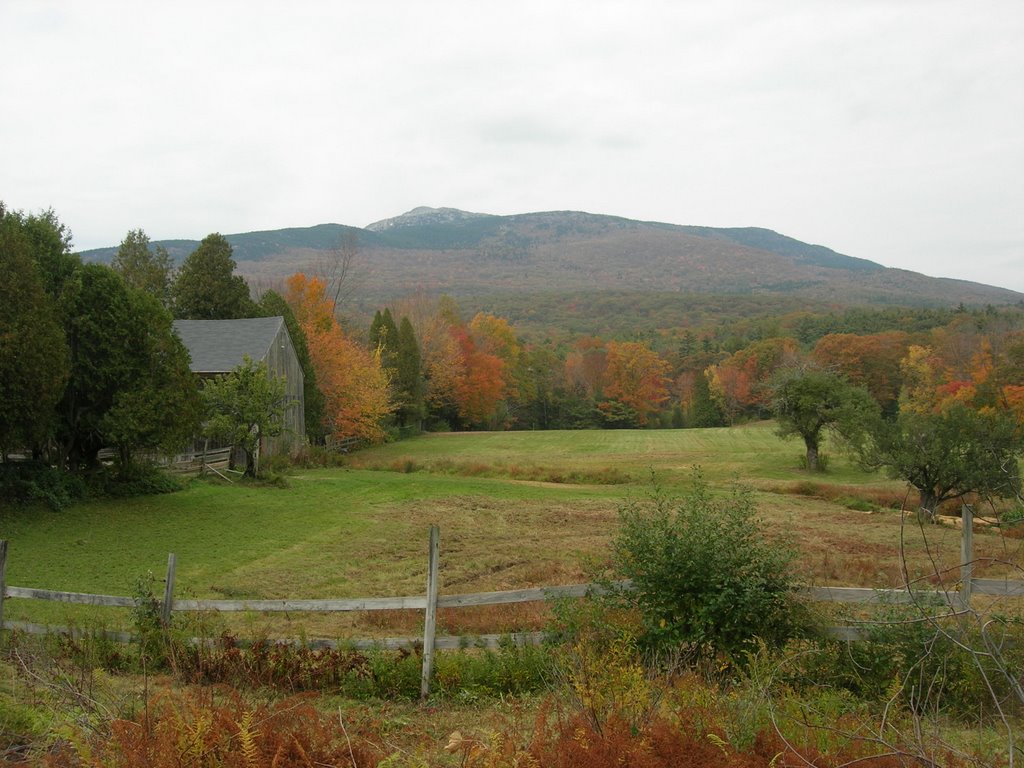
Today I drove around Mount Monadnock in southern New Hampshire while revisiting my past. Nearly thirty years ago I came here for the first time to stay with Steve Avery who was living in Dublin and selling ads for Yankee Magazine which is published there. One evening we drove to the Mount Monadnock Inn for an evening of fine food, good wine and songs around the piano. The next day we climbed up to the top of the mountain where you can see six states from the summit. The wind was blowing hard that day but the view was stupendous.

Indian summer is on way out and a cold front is headed toward New England. Today was cloudy and the reds, oranges, golds and yellows of the leaves were muted. I drove through Dublin and found the house were Steve had lived. He died two years ago of a heart attack while campaigning for reelection as the state representative for this region. A mutual friend sent me a clipping. Steve, one of the most sociable guys I've ever met, was at a barbecue, no doubt pumping hands and asking for votes. He was wall eyed and had a slight speech impediment, but he was the raconteur par excellence, and could mesmerize a room with his enthusiasm. We never talked politics, for Steve was a conservative Republican. His father had been the press officer for the National Association of Manufacturers, a bulldog for corporate capitalism.

Steve and I met in the early 1960s when he ran a coffee house called The Cat's Pajamas in Arcadia, California. It was the heyday of folk music and I recall that Jim Kweskin played there before he formed his infamous jug band. David Lindley, just out of high school, played at the Cat's with his group, the Mad Mountain Ramblers. Steve needed a place to live and we had an extra room in our rambling house in Sierra Madre Canyon so he came to be my roomate. After a few months he moved back east, where he'd grown up in Port Chester, New York, and went to hotel school at Cornell. When I moved to the Big Apple in 1962 he was my only friend and we got together frequently. And when I returned to the states from London in 1964 he was working at Rutgers and I stayed with him in Cherry Hill, NJ. Not long after that he gave up food for advertising and moved his family to a large house in Dublin. The last time I saw Steve was when I was living in Connecticut in 1982; he came with his daughter to visit us after my youngest son was born.

So Steve was much on my mind as I drove down highway 101 through Dublin, past his old house, and then south to Monadnock. His marriage ended, and his two daughters grew up and away, and not long before his death he remarried, but I never had the opportunity to meet her. My plans to visit Steve six years ago were incomplete at the time of my own breakup. We never talked again.

I couldn't find the Mount Manodnock Inn, but I traveled as far as Jaffrey where I saw dozen of scarecrows along the side of the road. Obviously there was a contest for the most creative, or the scariest. In Madison and in Sonoma (and I heard Boston is doing it as well) there are cows, dozens of cows decorated by artists (you can see pictures if you scroll back a couple of months). I've learned that Keene, New Hampshire, is the pumpkin capital of the world. A week before Halloween there will be upwards of 30,000 carved and lit pumpkins surrounding the town square.

Even without the sun, southern New Hampshire is beautiful. I drove within sight of Monadnock for miles, through Marlborough and up to Keene, my destination for the evening. Here I am staying with Adriana and her husband Bruce and their three kids, Morgan, Elias and Cora. I've known Adri since she was four. She was the daughter of Diana and her husband Peter, my oldest friend. Adri and I sat around Peter's bed as he was dying of prostate cancer several years ago. This afternoon we walked to the nearby Waldorf School and she showed me around the old building after we met her children. I met the "hand work" (art) teacher, and the wood shop instructor who presides over a paradise of tools, projects and wood smells. The Waldorf method sounds incredibly creative and I wanted to be back in school again. They have a wonderful life in this small New England town, and dinner included corn from the farmer's market and wild mushrooms gathered by a friend.

Tuesday, October 10, 2006

At Walden Pond


Today is Columbus Day, and, while elsewhere Native Americans are mourning this date as the beginning of the genocide of their people, at Walden Pond the beaches and pathways were thronged with tourists celebrating the holiday by communing with Thoreau's nature.

I am in New England to visit my son Luke, to see other friends in New Hampshire and Vermont, and to watch the leaves change color. That won't be easy because the East is in the grip of a heat wave. I packed for cool days and frosty nights, and today the temperature was in the mid 70's, requiring a bathing suit or at least shorts.

Luke is living in Waltham on the outskirts of Boston. Heidi's restaurant where we had breakfast was packed, with prices half what you'd pay at Denny's in Santa Cruz. Many of the customers were Latinos, and walking our meal off along Moody Street I saw shops and restaurants catering to Indians, Thais, Mexicans, El Salvadoreans and Guatemalans. A Spanish language newspaper is published here. We crossed the Charles River which flows down to Cambridge and Boston and along the river before heading back.

While Luke was doing his laundry, I drove over rolling hills and along leafy streets lined with rock walls to Concord and Walden Pond. This was ground zero of the American Revolution. I pictured a tiny body of water and no people. What I got was a large lake surrounded by a state park and crowds filled with hikers, picnickers, runners, families with crying kids, and people speaking a babble of languages. There was a Greek man selling ice cream from a truck (most of the popular choices were sold out) and bathers were sunning on sandy beaches and splashing in the water.

I made the pilgrimage to the site where Thoreau built his cabin. Nothing is left but a memorial, and, beside a sign with a quote from his writing, a pile of rocks. The custom, apparently, is to leave a rock behind and thousands have complied. The view from the cabin site is mostly obscured by trees now (there was more logging in Thoreau's day, and he could see a train across the pond).

Tomorrow I head north, to Keene in southern New Hampshire. On the way I plan to visit Jack Kerouac's grave in Lowell.

Friday, October 06, 2006

The Big C

Is there an easy time to introduce cancer into the conversation?

I've been living with prostate cancer for over five years. It's a part of my body now, something like an unwanted wart or the nobbly fingers sculpted by arthritis that work but with less elegance and grace than before.

"What are you going to do about it?" I've been asked by my friends as well as physicians. And when I tell them "nothing," they shake their heads more in bewilderment at my madness than in sympathy.

We live in a fix-it culture. If there is a problem, solve it. If something is broken, repair it. There are two solutions for cancer: cut it out or poison it. Get it out of my body, and/or kill it, NOW.

But the "it" is a part of my body, a few cells that have got their signals crossed, that reproduce erratically and unendingly, the cutoff switched bypassed or forgotten. The mass, the tumor, the shadow on the x-ray, is The Blob that will grow like topsy until it kills its host, me. Many (most?) cancers are fatal. It is a sign that my body is killing itself, committing suicide, without involving my head. How very strange!

Life, of course, is a terminal disease. No one here gets out alive (to quote my friend Jerry's book on The Doors). Who are we to wish it were otherwise?

My diagnosis came at a very difficult time in my life. I was trying to write a phd dissertation and my marriage was falling apart, not exactly in that order. The recommended treatment, surgery or irradiated seeds, was not convenient. It's hard to make these decisions while living in a borrowed room. In the first flush of discovery, I researched prostate cancer as if it were an academic conundrum. I attended a support group and met a sad man whose prostate had been removed, with all the attendant complications and a long healing process, but whose cancer had spread nonetheless. All that work and no reward. The common side effects of conventional treatment are scary: incontinency and impotency. The later I certainly did not need as I embarked on a new life as a single man. I learned that most men develop prostate cancer in their later years, and most of them die from other causes. But in some cases it spreads out of control. Timothy Leary, Frank Zappa, and my dear friend Peter Troxell died from it.

At that moment, not long into the diagnosis, help came in the form of an invitation from Dean Ornish to join his clinical study of prostate cancer. Ornish, who discovered that exercise and nutrition will cure heart disease (and wrote a number of best-selling books about his methods), was applying his ideas to prostate cancer (and by extension hopefully to breast cancer because the pathology is similar). For several years I followed a non-fat vegan diet, meditated and did yoga for at least an hour a day, exercised aerobically for three hours a week and attended a weekly support group meeting in Sausalito where, in addition to conversation and exercise, we were fed gourmet vegan meals and given more food and vitamins as well to take home with us. At the end of the study, Ornish determined that the PSA (blood test to determine the degree of cancer) of those adhering to the research guidelines did not rise as rapidly as that of those in the control group who did not follow the protocol. But the difference was not nearly so dramatic as in the more successful heart study.

Ornish's funding for a longer study eventually ran out and he turned his attention to advising giant food corporations on how to jump on the organic bandwagon. I found the weekly commute to Sausalito too demanding and the siren call of meat too irresistible. Did the diet and the exercise and the support slow the growth of my cancer? I really don't know. Ornish was careful to pick study participants with low PSAs. Mine was in the 6's; when Peter was diagnosed, his was in the 100's. Now, five years later, my PSA is slightly above 12. How does that correlate with tumor growth? Even the scientists and the urologists are not sure. Why do some cancers grow rapidly and others take their time? No certainty on that one either.

What is certain is that we will all die at some time. What merit is there in fighting it, now or later? In stories, the dead are usually given high marks for their valiant struggle against the dread disease, as if they are in competition, the cancer or me. But the cancer IS me. And failing to except that means we are fatally divided. Far better, I think, to embrace all parts of ourselves, the good with the bad (kind of like in an ideal marriage). Surely we've learned by now that healing is not always a cure.

My feeble religious faith, with insights from Christian, Buddhist and Hindu teachings, tells me that death is not the final answer. The universe is not random and meaningless. Whether something of me will continue or will merge with the whole I do not know. Jesus said over and over: "Be not afraid." And yet it is often Christians who are most fearful of death. The sign that we hear his Gospel and follow it should be not only that we love one another (and our enemies as well) but that we face death unafraid. Anything less is a travesty.

For myself, I've decided to let my body take its course. I joke that if I discover my cancer has decided to speed up and race to the finish, I will retire to a beach on an island in south Asia, with all necessary drugs to ease my pain and discomfort, and a young housekeeper to keep the flies away. Like the old elephant who leaves the herd on a journey to the dying ground, the Shangri-La of ivory tusks, I prefer to spare my family and friends the vision of a death scene. I want them to remember me not as a medicalized patient grasping at life but as the stubborn, cantankerous old fart that I am.

Wednesday, October 04, 2006

A Prophet of Nonviolence

Communion Reflection for The Feast of St. Francis

Yesterday was the 780th anniversary of the death of Francis of Assisi, and today we celebrate not only his feast day but also the beginning of a day of prayer for peace in this chapel. The day will end with an interfaith prayer service at 6:30 this evening, and the reading of passages of Scripture from the Jewish, Islamic and Christian traditions. We will be united under the Tent of Abraham the Patriarch who is reverenced by all three religions.

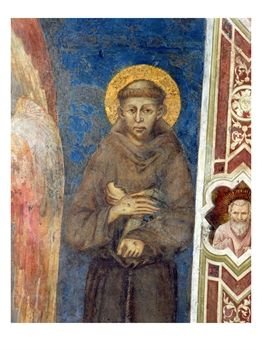
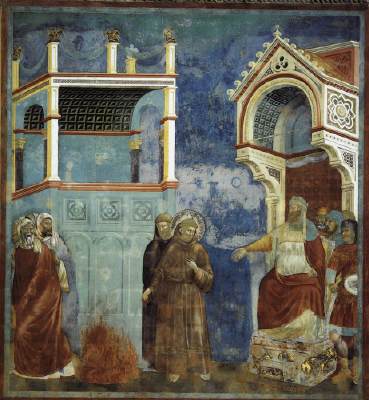
Of all the saints, none exemplifies radical discipleship more than Francis. When Jesus tells his followers, in the Gospel reading for today, that they will have nowhere to rest their head, we think of Francis sleeping in caves and in open meadows. And when Jesus tells his disciples to forget about their families and the past, we remember Francis renouncing his inheritance in the main square of Assisi and walking away naked. He went through the streets shouting “Pace e Bene!” meaning “peace and goodness to you!” and he was dismissed at first as a crazy fool.

Last summer I stood in that square and tried to imagine what it must have been like for the young son of a wealthy merchant to give up his privileges in order to follow the path of Christ and proclaim the Kingdom of God. The Jesuit peace activist John Dear has summed up this radical transformation by writing that “Francis embodies the Gospel journey from violence to nonviolence…cruelty to compassion, vengeance to forgiveness, revenge to reconciliation, war to peace, killing enemies to loving enemies. More than any other Christian, he epitomizes discipleship to Jesus. His witness continues to shine throughout the world.”

I want to say that Francis lived a life of prayer, poverty, penance, preaching and peace. It is the later quality that I want to speak of this morning, and in particular the role of Francis as prophet of nonviolence and a peacemaker through inter-religious dialogue.

Two years after his death at the age of 44, Francis was canonized by Pope Gregory IX who himself laid the foundation stone for the great new basilica in Assisi dedicated to the memory of the saint. In the old chapter hall of the Basilica, which dates from that same year, I was able to see relics that included the patched tunic worn by Francis, a pair of his sandals, and a small ivory horn that had been given to him during his journey to Egypt. It is said that Francis called his followers together with that horn, just as it had been used in Egypt to call the faithful to prayer.

The early years of the 13th century were a time of political turmoil and violence throughout Europe and the Middle East. Visiting Tuscany and Umbria, I was struck by the number of towns and cities built on top of hills where they could be defended from attacks by their neighbors. There were constant wars and crusades against Jews, Moslems and “heretics.” At 19, Francis joined a military expedition against Perugia but was captured and imprisoned for a year. Four years later he tried again to be a soldier, but he heard a voice telling him to go home, and he did. Not long after that, the crucifix in San Damiano spoke to him and he took “Lady Poverty” for his bride. His love for others was so great that, in the spirit and poverty of Christ, he could embrace lepers.

This was the time of the Fifth Crusade to retake Jerusalem and the Holy Land and the motto of the crusaders was: “God wills it.” Francis begged Cardinal Pelagius, the Christian commander, to stop the fighting, but he refused. So Francis, who sought a non-violent solution through dialogue with the enemy, began a long march with a companion to Egypt where the Crusaders were battling the Muslim forces. They were captured by the army of Sultan Melek-el-Kamel and beaten before being taken to see the ruler. In his interview with the Sultan, Francis presented an alternative to conversion by force of arms and showed by example that it was possible to follow the Gospel command that we love our enemies.

The Sultan was so impressed by the kindness and gentleness of Francis that he is reported to have said: “If all Christians are like this, I would not hesitate to become one.” Francis accompanied the Sultan’s nephew to a mosque and prayed there, saying “God is everywhere.” During his visit with the Muslims, Francis was so impressed by the use of prostrations for prayer that in his letters he urged Christians to adopt a similar practice. The Sultan showered him with gifts, but the only one Francis would take back with him to Assisi was the ivory horn.

On his way back out of Egypt the crusaders wanted to kill him as a heretic and the Muslims soldiers had to protect him from the Catholic warriors. Back in Italy, his brother friars also criticized him for his “politics” and for his outreach to their Muslim enemies. But Francis responded by adding to his early rule the instruction that all friars are to love their enemies, “as the Lord commands.”

After leaving Assisi last summer, I traveled down the mountain and visited the little chapel of the Porziuncola, which is now inside the huge basilica of Santa Maria Degli Angeli, and I stood a short distance away on the spot where St. Francis breathed his last breath. As he lay dying, Francis told his followers: “We have only just begun to practice the Gospel.”


Outside the Basilica, there is a large bronze plaque on the wall depicting religious leaders from all over the world who attended a summit for peace called by Pope John Paul II twenty years ago. More than 200 distinguished participants from a dozen faiths, including the Dalai Lama and Mother Teresa, were part of the historic event, which took place during the tensions of the Cold War. On the 20th anniversary last month, Pope Benedict XVI said that John Paul’s “invitation for a choral witness to peace served to clarify, without any possibility of misunderstanding, that religion can only be a source of peace. We need this ‘education to peace’ more than ever,” the Pope added.

Today, as we gather under the Tent of Abraham to pray for peace with our Muslim and Jewish friends, we can remember the example of the radical discipleship of St. Francis, the prophet of nonviolence and the proponent of inter-religious dialogue, who took seriously the Gospel command that we love our enemies.

Monday, October 02, 2006

Truth on the Ground

Sojourners is urging everyone, from Oct. 4 to 11, to watch a new DVD documentary on the human cost of the war in Iraq, "The Ground Truth," which was released last week. I ordered a copy from Netflix and I found it a kick in the stomach and a further (if anything more is needed) incitement to resistance to our government's murderous misadventure in the Middle East.

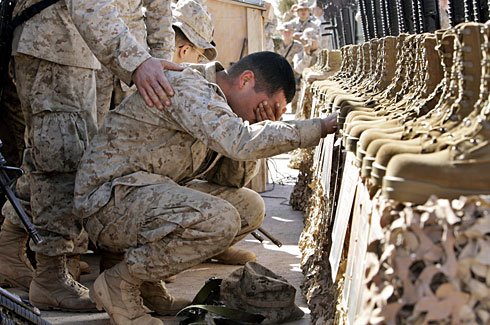
The so-called "war on terror" in Afghanistan and Iraq is not only killing combatants and innocent civilians, it is also brutalizing a whole generation of young Americans. Produced and directed by Patricia Foulkrod, the film features interviews with 10 returning vets, men and women, several of them with disabling wounds. The stories they tell of random killing and disregard for human life, promoted in boot camp and by senior officers in the field, are disturbing. And the nightmare does not stop when they return home to encounter the insensitivity and cruelty of the Veterans Administration. Anyone turned into a killing machine does not transition easily to civilian life.

One gung-ho Marine tells of killing an iraqi woman only to discover later she was holding a white flag. It was a turning point for him against the war. Another vet recalls being screamed at by an Iraqi who was carrying his brother's head, which had just been blown off. One Marine speaks of images of the destruction that remain with him back home. "Your purpose is to kill, make no mistake," he tells the camera. "There was nothing honorable about what we did. And that broke my heart."

This documentary joins a whole raft of others that have revitalized the cinematic genre. Because of them, we know much more today about the war and terrorism, 9/11, crossword puzzle addicts, global warming, birds and penguins, Enron, and, in "Jesus Camp" soon to be released, the threat from militant far right Christian children. For more information about "The Ground Truth," and to see a preview of the film, click here.

Despite more stories in the media that the Democrats might actually have a chance to retake Congress in the November elections, there was disturbing news last week. Joe Lieberman and a few other turncoast Senate Democrats supported the Republican majority to pass a torture bill not much different from what Bush had originally requested, despite McCain's feeble attempts to make it more palatable. An editorial in the New York Times, "Rushing Off a Cliff," summarized the bill's biggest flaws (click here to read it).

And in related news, Congress authorized an additional $70 billion in "emergency" funds to pay for expenses in Afghanistant and Iraq, including almost $24 billion to repair and replace worn-out equipment. The new funds include $2 billion to somehow prevent roadside bombs which are the leading cause of deaths among U.S. troops in Iraq. One proposal has been to dig a trench around Bhagdad, one of the world's bigger cities, and idea that Saddam had thought up (too late) as a way to prevent defeat. Madness. Since Sept. 11, our government has turned over $507 billion to the military. And that's just the beginning, if Bush and the Republicans remain in power. The United States spends more on its military than ALL of the other countries in the world combined. Can you imagine how these enormous sums might be spent to promote life rather than death?

Can the Democrats take over? They certainly have not yet mounted a challenge in Washington. Alexander Cockburn, the curmudgeonly columnist for The Nation, whose challenges to the left (from the further left) sometimes make my blood boil, believes that the US antiwar movement is "near dead," with the environmental movement running a close second in the mortality race. One of the reasons, he writes in a column titled "From Flying Saucers to 9/11," is distraction from the conspiracy buffs who believe Bush was behind the terrorist attacks. Speaking of cynicism towards government and conspiracy theories which include the Kennedy assassination, he writes:
It seems to demobilize people from useful political activity. I think the nuttishness stems from despair and political infantilism. There's no worthwhile energy to transfer from such kookery.
Cockburn believes that "the Bush gang, and all the conspirators of capital, are delighted at the obsessions of the 9/11 cultists. It's a distraction from the 1,001 real plots of capitalism that demand exposure and political challenge." (I wrote about the 9/11 conspiracy movement here.)

You can read Cockburn's full column here.

More optimistic news would be gratefully appreciated.